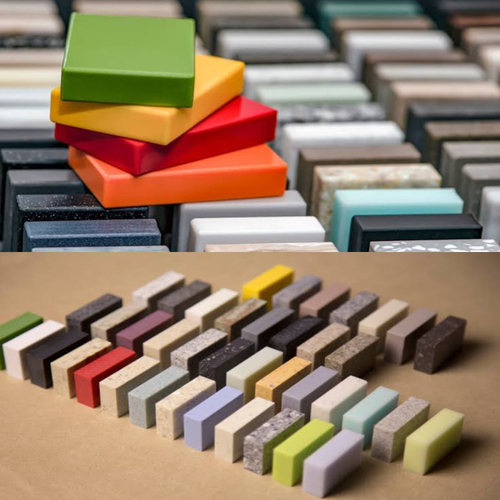
Solid surface is a low-maintenance countertop material known for its seamless appearance and numerous available designs, which often mimic the look of natural stones.
Introduced in the late 1960s under the brand “Corian,” it is made from acrylic or polyester resin that can be shaped into any form thanks to thermoforming. It has a consistent composition throughout its thickness, hence the term “solid surface.” Unlike laminates, which feature a thin decorative surface layer, solid surface has a uniform color and pattern evident throughout its entire thickness.
Apart from Corian, other notable brands include “Staron,” “Hanex,” and “Solflex.” It is also often referred to as “synthetic granite” by some contractors and suppliers here in the China.
What are the Advantages of Solid Surface Countertops?
Seamless Appearance
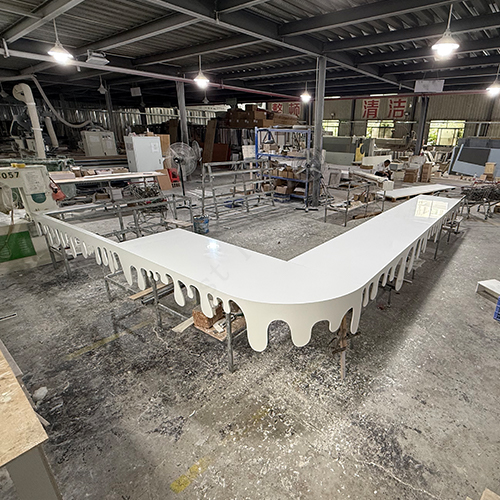
The most significant advantage of solid surface countertops is their smooth, seamless look. Individual sheets or slabs can be connected neatly, creating an almost invisible seam for a sleek, uninterrupted finish. This is a big plus, especially for large, intricate countertop designs.
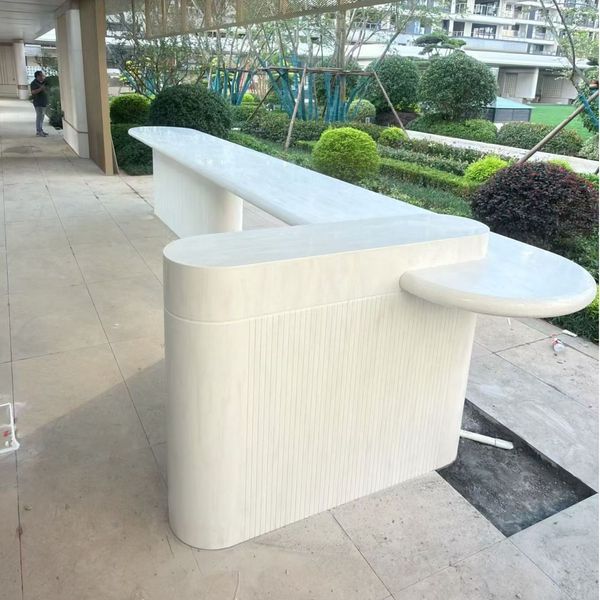
This feature isn’t just for residential kitchens, though. You’ll often find solid surface counters in many fast food chains, convenience stores, and hospitals.
Variety of Designs
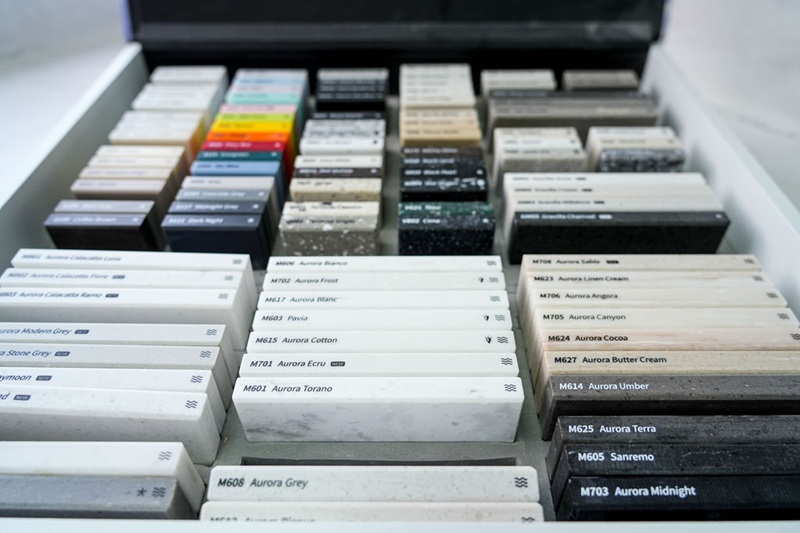
Solid surface countertops offer an impressive range of color and pattern combinations, making them a versatile choice for any kitchen or bathroom. You can find everything from bright, eye-catching colors to softer, more understated earth tones. Some even boast silver flecks or metallic chips scattered throughout their surface.
With a broad range of options, solid surface countertops provide a flexible and appealing choice for homeowners and designers for a more personalized kitchen space.
Repairability
Another great thing about solid surface counters is their durability and repairability. You can quickly remove minor scratches and burn marks with a soft, abrasive cleaner. And even if the damage is a bit more serious, you don’t necessarily need a whole new countertop. A pro can usually fix it by sanding down the surface and giving it a new polish, making it look good as new.
It’s a practical and cost-effective solution for busy households and commercial establishments. After all, life happens—spills, drips, and accidents are inevitable. But these minor mishaps don’t have to be a major headache. You can relax, knowing that your countertop can withstand everyday wear and tear and that most damage can be repaired without too much fuss.

What are the Disadvantages of Solid Surface Countertops?
Vulnerable to Heat
While a solid surface has its perks, it also has its drawbacks. For one, it’s not heat-resistant. Hot pots or pans can leave a scorch mark on their surface, so you must always use trivets or hot pads to avoid damage.
Thus, it will require some adjustment if you’re used to more heat-resistant surfaces, like granite or marble. If you do a lot of cooking and are worried about forgetting to use a trivet or hot pad, consider a more heat-resistant option, like natural stone or stainless steel, instead.
Additionally, solid surface is not ideal for outdoor applications as it can fade or warp with prolonged, direct exposure to the sun. Extreme temperature fluctuations may also cause the material to expand and contract, potentially leading to cracks.
Vulnerable to Scratches
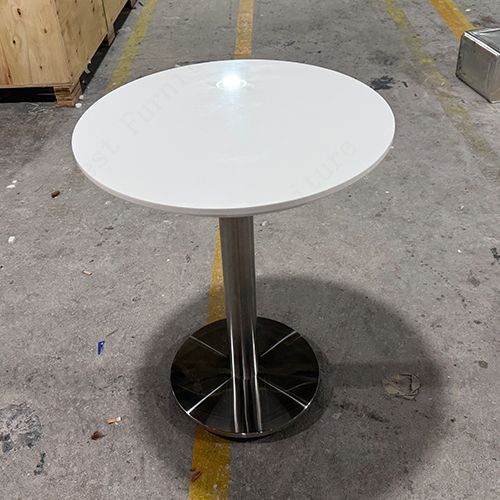
Solid surface countertops are generally scratch-resistant but not scratch-proof. Sharp objects, like knives, and abrasive materials, like steel wool and scouring pads, can leave marks on the surface.
Remember: although your counter can handle everyday wear and tear, it’s not indestructible. It’s best to take a few simple precautions to keep it looking great. Use a cutting board when chopping veggies, and opt for a non-abrasive cleaner when tidying up. With a little bit of care, your solid surface counter can stay looking new for years to come.

 Meet the Onebest Furniture Solid Surface Skill Makers Series-Mike Chen
 Onebest Furniture-One of The Top Corian® Solid Surface Furniture Manufacturers in China
 Choosing a Solid Surface Fabricator: Why Accreditations Matter

